
Pokemon card value checker
Type any card name to see what it is actually worth right now — the live market price, the full low-to-high range, and PSA / CGC graded values. Over 20,000 cards from Base Set to the current Mega Evolution block. Free, no account.
The four numbers, and which one is your answer
Every card lookup returns four different prices, and most value checkers show them without saying what they mean. That is where the bad valuations come from — people read the high figure and think that is what their card is worth. Here is what each one actually is.
Low
The cheapest active listing for that printing and condition. Usually a played copy, a seller clearing stock, or an overseas listing with slow shipping.
How to use it: Treat this as your floor when buying — not as what your card is worth. Sellers rarely hit it.
Market
Your answerThe figure derived from what copies have actually been selling for recently, rather than what sellers are asking. This is the number we lead with everywhere on the site.
How to use it: This is the honest answer to "what is my card worth". If you sold today at a fair price, this is roughly your outcome.
Mid
The midpoint of current asking prices across listings. It sits above market whenever sellers are collectively optimistic — which is most of the time.
How to use it: Useful as a listing price if you are patient and your copy is clean.
High
The top of the current listing range. Often a pristine copy, a rare variant, or simply an aspirational price nobody has paid.
How to use it: Ignore it when valuing your own card. A high number here does not mean your copy is worth that.
Live prices, right now
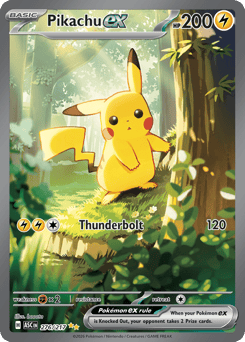
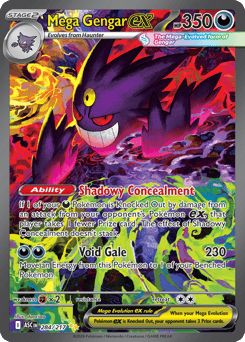
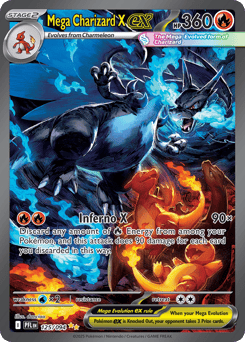
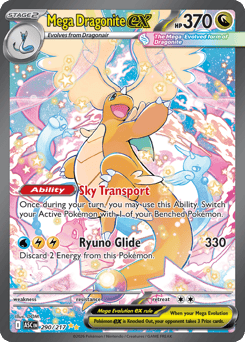
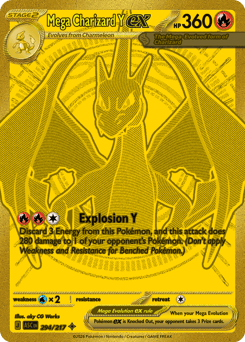
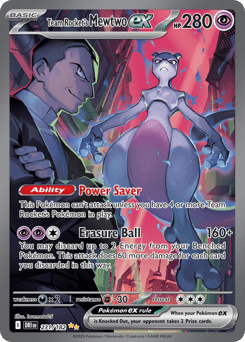
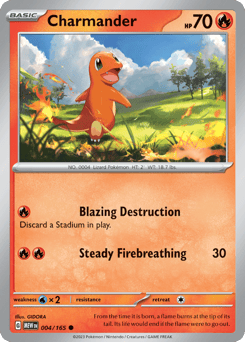
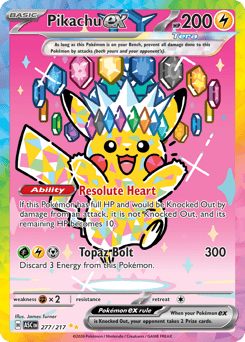
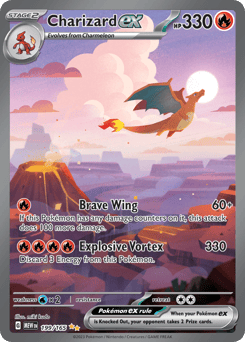
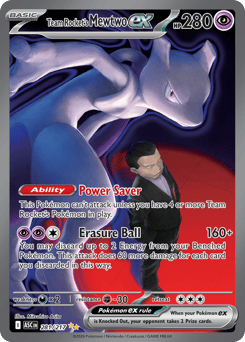
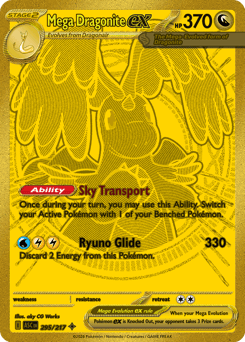
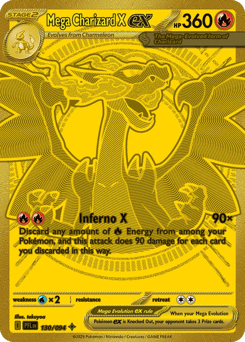
These are the highest-value cards in the current chase sets as of today's refresh — not a static list. Every card on the site carries the same live pricing.
What actually decides your card's value
Four things, in roughly this order of impact.
Which printing you actually own
This is the single biggest source of wrong valuations. The same artwork can exist as a Normal, Holofoil, Reverse Holofoil, 1st Edition, Shadowless, or a set-specific promo — and they can differ by 100× in price. Check the set symbol and the collector number at the bottom of the card, not just the Pokemon's name.
Condition, judged honestly
Most collectors overrate their own cards. Look at the corners under a light, check the edges for whitening, and hold the card at an angle to catch surface scratches on holo areas. A card you would call Near Mint often grades as Lightly Played once someone else inspects it.
Graded or raw
A slab does two things: it authenticates the card and it fixes the condition debate. That is why a PSA 10 routinely sells for a large multiple of the identical raw card. The premium is not linear — it concentrates heavily at the top grade.
What the market is doing this month
Pokemon card prices move. A new set release, a popular YouTube opening, or a reprint announcement can shift a card 20% in a week. A price you saw a year ago is not a price today, which is why every figure on this site carries a live timestamp.
Not sure how to judge condition? The condition guide walks the full NM-to-DMG scale with the specific defects to look for, and the centering tool measures your card's borders the way a grader would.
Is it worth grading? Start with the raw price
Once you know the raw market value, the grading question mostly answers itself. Grading costs a fee per card plus shipping both ways and insurance, so the raw value has to be high enough for the grade premium to clear those costs.
| Raw market value | Verdict | Why |
|---|---|---|
| Under ~$30 raw | Almost never worth grading | Grading fees plus shipping both ways typically exceed the entire value of the card. Even a 10 rarely clears the cost. |
| ~$30–$100 raw | Only for clean, modern, high-population chase cards | You need a realistic shot at a 10. A 9 on a card in this band often sells for barely more than the raw copy, leaving you down on fees. |
| ~$100–$500 raw | Usually worth it if the card is visually clean | The gap between a raw copy and a 10 is wide enough to absorb fees with room left. Centering is the usual thing that ruins it. |
| $500+ raw | Grade it — and consider the faster tier | At this level authentication alone adds liquidity. Buyers of expensive raw cards discount heavily for counterfeit and alteration risk. |
These bands are a starting filter, not a rule — a card with a thin population at the top grade can be worth grading well below these thresholds. For which company to send it to, see PSA vs CGC vs BGS, and how to grade Pokemon cards covers the submission process itself.
Got a stack to get through?
Typing names one at a time is fine for a card or two. The free iOS app identifies the printing, set, and rarity straight from your camera, so a binder takes minutes instead of an evening.
Pokemon card values — frequently asked
How do I check what my Pokemon card is worth?
Type the card's name into the search box on this page. Match the result to your copy using the set symbol and the collector number printed at the bottom of the card, then read the market price on that card's page. The market figure reflects recent actual sales, not asking prices.
Is this Pokemon card value checker free?
Yes. Card lookups, market prices, the full low-to-high price range, and PSA / CGC graded values are all free on the website with no account and no signup.
Why does my card show several different prices?
Because a single card usually has several printings, and each printing has its own market. A Reverse Holofoil and a Normal copy of the same card are different products with different prices. Pick the variant that matches the finish on your physical card.
How accurate are the prices?
The market figure is derived from recent real sales data and refreshes daily. It is an accurate picture of the going rate for a card in average condition — but your specific copy's condition, and whether it is graded, can move the real outcome well above or below it.
Do I need to scan my card, or can I just type the name?
Either works. On this website you type the name. In the free iOS app you can point your camera at the card and it identifies the printing, set, and rarity automatically, which is faster when you have a stack to get through.
Should I get my card graded?
It depends mostly on the raw value. Under roughly $30 the grading fees usually exceed any gain. Between $100 and $500 it is often worth it if the card is visually clean. Above $500 the authentication alone tends to justify it. See the grading breakdown on this page.
Check a card now
Free, instant, and no account needed.